Blog
Wheel of the Year: Origins & History, Spiritual Meaning, Sabbats & Esbats
WHEEL OF THE YEAR
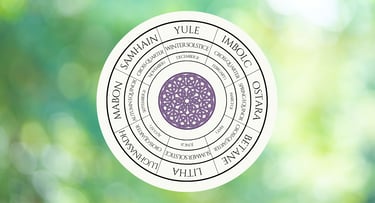
Origins & History of the Wheel of the Year
While the wheel of the year is based in ancient pagan festivals, it's present form was unknown before the mid-20th century. The wheel of the year as we know it today it attributed to being formed and popularized by the founder of Wicca, Gerald Gardner, and his colleague Ross Nichols throughout the 1950's, 60's, and 70's. However, much of the folk festivals and traditions that make up the wheel of the year can be traced back to ancient times, when people relied on the cycles of the sun, the moon, and the earth to mark the passage of time, while finding spiritual significance in these times as well. Historically, these festivals were very agricultural focused and land based.
All of the sabbats are derived from Western European traditions, with the festivals stemming predominantly from Celtic influence, with some Norse, Germanic, and Anglo-Saxon influences. The earliest origins of the wheel of the year were developed by the ancient Celts, being the four Celtic fire festivals that fall on the cross quarter days, also known as the "Greater Sabbats". The sabbats that fall on the solstices & equinoxes have come to be known as the "Lesser Sabbats", however these terms just provide a distinction between the two types, and it does not speak to one kind being more important than another.
Many modern holidays and christian holidays can be attributed to having their roots in these older pagan festivals, but were adopted and reformed from them to fit into the culture or religion, and when you become familiar with these pagan sabbats you can see the crossover. Some examples of this are Yule & Christmas, Ostara & Easter, Samhain & Halloween, and the list goes on. This could be a whole article, or series of articles on it's own, so I won't go into this too much here.
February 28, 2026 • by Emily Munroe
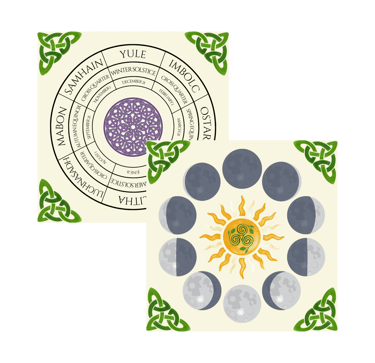
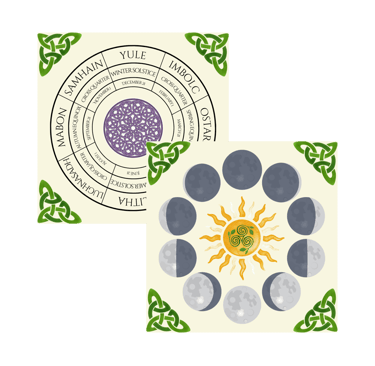
The wheel of the year is an annual cycle of seasonal festivals and spiritual observances that many witches, pagans, and spiritual practitioners follow. These mark the years main solar events ("quarter days" such as solstices & equinoxes, the midpoints between them ("cross-quarter days"), and some practitioners even include the lunar events as part of their wheel. The wheel of the year conceptualizes the natural cycles of light and dark, life and death, ebb and flow; providing modern practitioners with a framework to align themselves with these rhythms, celebrate the cycles, and find spirituality in the seasons. The wheel of the year is central in many modern pagan and witchcraft practices today, though many also choose not to observe it or only observe the holidays that align with their own traditions, culture, or personal practice. Personally, the wheel of the year has been a central part of my practice since I became a witch and I thoroughly enjoy celebrating it year after year. In this article, we will explore the origins & history of the wheel of the year, the sabbats, and even the lesser known esbats, the lunar counterpart of the wheel that it usually not spoken about or included when talking about or following the wheel of the year. Since I am in the Northern Hemisphere, I will be sharing from that perspective because that is what I know. So light a candle, grab a cuppa and get cozy - let's dive in.
The Sabbats | Honouring the Solar Cycle
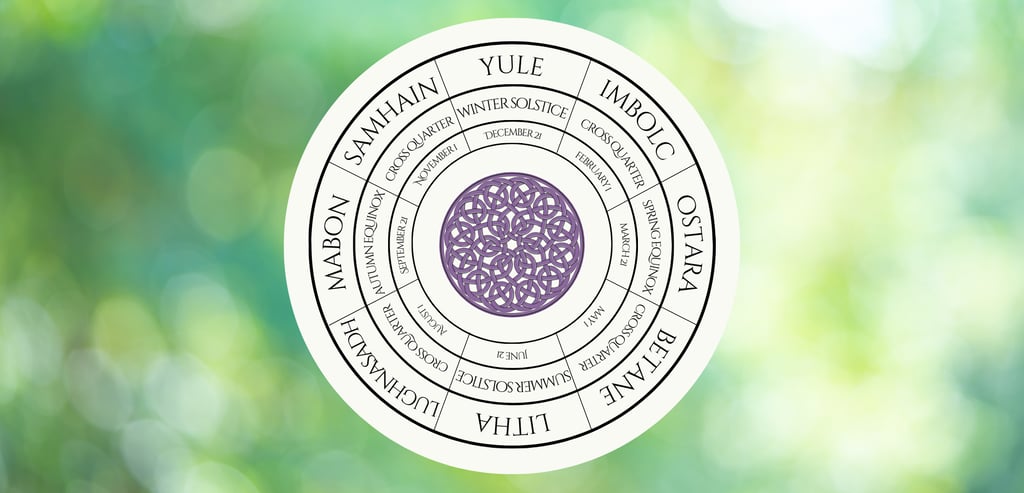
The sabbats are 8 seasonal holidays that mark, honour, and celebrate the sun's cycle throughout the year. Each of the 8 sabbats holds certain spiritual significance and correspondences. Let's explore them:
Samhain
October 31 - November 1
Samhain marks the midpoint between the autumn equinox and the winter solstice. It is considered the beginning of the cycle within the wheel, often being referred to as "the witches new year". The name "Samhain" is Gaelic, meaning "summer's end". Samhain celebrates final harvest, and the profound shift when the season of light has reached it's end, and the season of darkness takes it's hold.
Yule
December 21 - January 2
Yule marks the winter solstice, the day of the longest darkness, and is traditionally celebrated by many as a 12 day festival known as "The 12 Days of Yule" (Sounds familiar, right? insert witty comment about the 12 days of Christmas here, hehe). Yule celebrates the rebirth of the sun on the solstice night. The name "Yule" is derived from the Norse "Jól", Danish "Jul", and Old English "Geol".
Imbolc
February 1 - 2
Imbolc marks the midpoint between the winter solstice and the spring equinox. The name "Imbolc" is said to come from Old Irish, meaning "in the belly", referring to pregnant ewe's and the promising fertility of the land at this time. Imbolc celebrates the promise of spring, the growing light, making it through the dark season, and the slow stirrings of life beginning again beneath the surface.
Ostara
March 20 - 21
Ostara marks the spring equinox, a day of equal light and dark, and meets the promise of Imbolc. It celebrates growth, balance, fertility, and a new dawn. The name "Ostara" is derived from the Germanic/Anglo-Saxon goddess of dawn & spring, Eostre (Again, sounds familiar, right?).
Beltane
May 1 - 2
Beltane marks the midpoint between the spring equinox and the summer solstice. It celebrates the height of spring, the earth in full bloom, divine union, fertility, passion, and sexuality. The name "Beltane" is of Gaelic origin, meaning "bright fire" or "fires of Bel".
Litha
June 20 - 22
Litha marks the summer solstice, the day of the longest light. It celebrates the height of the sun's power, and nature's abundance. The name "Litha" is derived from Old English and Anglo-Saxon, used to describe the months of June and July, meaning "gentle", "calm", and "navigable".
Lughnasadh
August 1 - 2
Lughnasadh marks the midpoint between the summer solstice and the autumn equinox. It celebrates the first harvest and it's abundance, and the coming of autumn. The name "Lughnasadh" is derived from the Celtic god "Lugh" and Old Irish for "Assembly of Lugh" or "Lugh's Gathering".
Mabon
September 20 - 22
Mabon marks the autumn equinox, a day of equal light and dark. It celebrates the second harvest, preparing for winter, and reflection on what one has gained and lost through the year. The name "Mabon" was derived from the Welsh god "Mabon ap Modron", meaning "divine son", "great son", or "great youth".
A note I'd like to leave you with here is that while these holidays do correspond with specific dates, they are indeed seasons, so don't stress yourself out trying to fit a whole bunch of celebrations or rituals into one or two days, you can allow your celebrations and practices to unfold with you throughout the seasons.
The Esbats | Honouring the Lunar Cycle
While the sabbats highlight the suns journey through the year, the esbats are it's lunar counterpart, highlighting the moon's journey through the year. This lunar aspect of the wheel is made up of 12 lunar events, marking the full moons of each month of the year (sometimes 13 if it's a blue moon year). Each moon holds it's own spiritual significance and correspondences, depending on the culture and bioregion of the practitioner. While the concept of esbats comes from Wicca, this can also be practiced from a witchcraft and pagan path. Many definitions I've seen of the esbats speak to them as being coven gatherings with specific rituals, however they can be observed by solitary witches and practitioners in varying ways, and I am not Wiccan so I will speak to this from a witchcraft and pagan perspective, which is what I practice, with North American bioregional influences as well since that is where I'm located. Additionally, I see it so it is not only the full moons that is the esbat, but that entire lunar cycle. For example, say you are working with the Flower Moon in May - it’s not limited to only the Full Flower Moon, but the New Flower Moon, Waxing Flower Moon, Full Flower Moon, and Waning Flower Moon are all included, honouring the whole cycle.
I find that a lot of the time when the wheel of the year is being discussed or taught, it's always all about the sabbats, following the sun, and the moons place in the wheel it is rarely included, usually separated, and I can't help but feel patriarchal roots in that. But, the moon holds just as great a place as the sun in our lives, and in the sacred wheel that is the cycles of nature. She is the ancient calendar that humans followed for centuries, providing a way of marking the passage of time that the sun does not. Her place is significant, especially to women, and so I feel it to be important that she be included in the wheel of the year.
There are a plethora of names for each month’s full moon that vary by culture and region, however there are certain names that have become common names for them across North America. Most of these common names have solely Native American origins, with some also having European roots. These names are also found in Colonial American culture as colonizers adopted these names from the Native Americans, which is likely how we ended up using them commonly today. That begs the question - is it cultural appropriation to use these names? The answer to this is nuanced and cultural appropriation is a sensitive subject. Many of these names may be relevant to us if we reside in a region where they hold true, like referring to the snow moon of February when you do in fact recieve significant snowfall in your area during this time. However, some of these names may not be so relevant to us, like referring to the sturgeon moon of August when fishing for sturgeon is not significant to you or your people, and there may not even be sturgeon in your area or have a history of sturgeon significance in your area, as this moon was named by the native tribes who fished the sturgeon for sustenance in the Great Lakes and Lake Champlain at this time of year. From my perspective, using a name with Native American roots is not necessarily cultural appropriation, but when you use it blindly, out of context, without honor, respect, or knowledge of it’s significance, it can be. When used in the right way, it can be a great way to honour those who came before us and lived so closely with nature. When using these names for the moons, consider their origins and history, their bioregional influences, your own ancestry and bioregion, or you can even get creative and come up with your own names that reflect those things and are personal to you. This is important because when we do this not only are we choosing to not blindly engage in cultural appropriation, we are also choosing to honour our own ancestral heritage, connect with our own culture, connect with the land, or use our creativity to create something new that reflects our own values, our bioregion, and our own unique sense of spirituality. In doing this we deepen our personal practice and find a more conscious connection than we would by appropriating terms from a culture that we are not part of and have no knowledge of it’s history. This is part of how we decolonize our practice. Cultural appropriation not only impacts the culture whose traditions are being appropriated, but it also creates a greater rift of spiritual disconnect in the appropriator as they seek to strip away tidbits of spirituality from other cultures without genuinely learning about that culture or sharing traditions, perspectives and practices in a respectful, mutual way that builds real connections, honors our ancestors, and expands the mind and spirit. However, this is a whole other conversation on it’s own, for another time, so for now let’s continue to explore the full moon esbats.
January Moon
Common Name: Wolf Moon (Native American, Celtic, Anglo-Saxon)
Other Names: Moon After Yule (Anglo-Saxon) Stay at Home Moon (Celtic), Quiet Moon (Celtic) Center Moon (Native American) Severe Moon (Native American)
January’s full moon falls in the depths of winter, when the hungry wolves wander and howl. It is a time when conditions are harsh and intense. This moon signifies tapping into the strength and courage to make it through the winter, finding support and connection in community, and embracing the quiet and stillness with introspection.
February Moon
Common Name: Snow Moon (Native American, Celtic, Anglo-Saxon)
Other Names: Ice Moon (Celtic, Anglo-Saxon) Hunger Moon (Native American), Bear Moon (Native American)
February’s full moon falls in a time where we have made it through the darkest parts of winter, though snow continues to blanket the land, and the light begins to grow again. This moon signifies promise, mystery, tending to what lies inward beneath the surface, unseen transformation, and making the first preparations for the growing season that lies ahead.
March Moon
Common Name: Worm Moon (Native American)
Other Names: Lenten Moon (Anglo-Saxon) Wind Moon (Celtic), Plough Moon (Celtic), Sap Moon (Native American), Crow Moon (Native American), Chaste Moon (Anglo-Saxon)
March’s full moon falls in a time when the end of winter is near, the thaw is beginning, and life begins to flow again. This moon signifies awakening, renewal, new beginnings, making the first preparations for the growing season, and clearing away the staleness of winter.
April Moon
Common Name: Pink Moon (Native American)
Other Names: Egg Moon (Anglo-Saxon), Budding Moon (Celtic), Seed Moon (Celtic), Growing Moon (Celtic)
April’s full moon falls in a time when the energy of spring is growing, and earth is ripe with fertility. This moon signifies the return of active growth, reaping early spring rewards, the fertile creative energy to bring life, and the nurturing of new ideas.
May Moon
Common Name: Flower Moon (Native American)
Other Names: Planting Moon (Native American), Milk Moon (Anglo-Saxon) Mother’s Moon (Celtic), Hare Moon (Celtic)
May’s full moon falls in a time when the height of spring is apparent with the abundance of blooming flowers and reproducing animals. This moon signifies the flourishing and nourishment of spring, prosperity and transformation, and finding grounding and balance.
June Moon
Common Name: Strawberry Moon (Native American)
Other Names: Mead Moon (Celtic) Horse Moon (Celtic) Rose Moon (Celtic)
June’s full moon falls in a time when the berries are ripe for the picking, and we reach spring’s end and summer’s beginning. This moon signifies the culmination of spring’s growth, and we carry forward the momentum of that growth into the summer with the energy of the horse.
July Moon
Common Name: Buck Moon (Native American)
Other Names: Thunder Moon (Native American) Salmon Moon (Native American), Hay Moon (Anglo-Saxon), Claiming Moon (Celtic), Herb Moon (Celtic)
July’s full moon falls in a time when the buck’s grow their new antlers, fish return, and the summer brings thunderstorms and heat. It’s also a time when herbs were gathered and the bounty of the earth was claimed. This moon signifies regeneration, growth, emerging power, and claiming the bounties of nature.
August Moon
Common Name: Sturgeon Moon (Native American)
Other Names: Lynx Moon (Celtic), Grain Moon (Anglo-Saxon), Lightning Moon (Anglo-Saxon), Dispute Moon (Celtic)
August’s full moon falls in a time of summer’s culmination, when we are called to pause, hold space, and make refinements before the harvest season. This moon signifies the uncovering of hidden truths stirred up from the depths, the quiet observation and insight of what we have accumulated throughout the growing season, the resolution of conflicts and establishment of boundaries, breakthroughs, and emotional release.
September Moon
Common Name: Harvest Moon (Native American, European)
Other Names: Corn Moon (Native American) Wine Moon (Celtic), Song Moon (Celtic), Barley Moon (Celtic)
September’s full moon falls in a time of the beginning of the harvest season. This moon signifies the reaping of the rewards of your labour from the growing season, deep reflection and gratitude for what you have gained and lost, and preparing for the shift to autumn, the season of release.
October Moon
Common Name: Hunter’s Moon (Native American) or Harvest Moon (Native American, European)
Other Names: Seed Fall Moon (Celtic) Sanguine Moon (Neo-Pagan), Falling Leaves Moon (Native American)
October’s full moon falls in a time of peak autumn and harvest season. This moon signifies shifting inward, focusing on introspection and reflection, having the courage to release what no longer serves you, making the final harvest, and preparing for the transition to winter.
November Moon
Common Name: Beaver Moon (Native American)
Other Names: Frost Moon (Native American), Mourning Moon (Celtic), Darkest Depths Moon (Celtic)
November’s full moon falls in a time of late autumn, when the early winter begins to set in and first frosts appear. This moon signifies the making preparations for the winter, reflecting and releasing, and acknowledging death and making space to mourn losses.
December Moon
Common Name: Cold Moon (Native American, Celtic)
Other Names: Moon Before Yule (Anglo-Saxon), Long Night Moon (Anglo-Saxon), Oak Moon (Celtic)
December’s full moon falls in a time of the deep chill of winters grip. This moon signifies a deep period of introspection, stillness, endurance, and the promise of the light’s return.
Other Articles
Imbolc: Spiritual Meaning, Origins & History and Rituals
The Witches Calendar
A witches guide to creating a custom calendar year of seasonal spiritual celebrations, rituals and magic.
Join the waitlist to be the first to know when The Witches Calendar guidebook is released.


About the Author
Emily is a professional artist, author, creator & witch based in Nova Scotia. She is the founder of Bloom & Bramble Witchery, a metaphysical arts studio & blog for witches, pagans, occultists, & spiritual practitioners. Her work is centered around her passion for witchcraft, paganism, the occult & spirituality.